
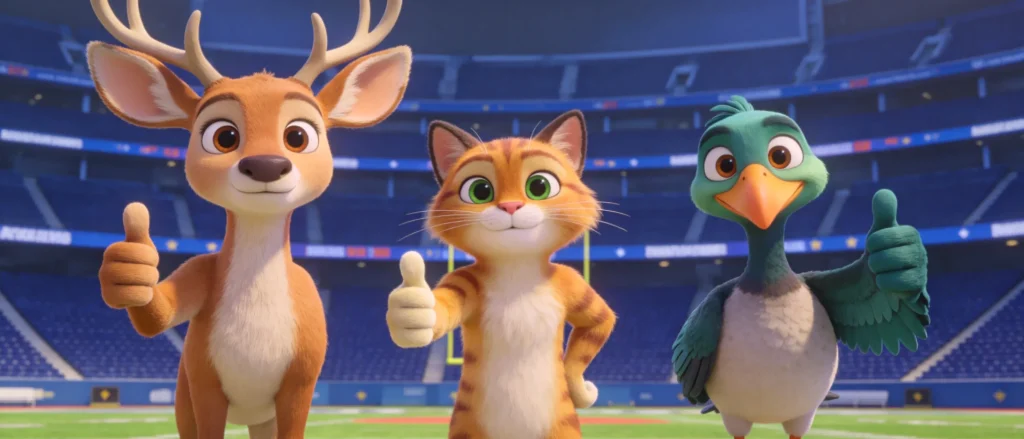
The 2026 World Cup kicks off from 11 June to 19 July 2026 — not only the largest edition ever, but the first hosted jointly by the USA, Canada and Mexico. Before the tournament begins, it is often the story-filled official mascots that first capture fans’ attention. This article fully explains the 2026 World Cup mascots, the theme slogan, and the historic significance and highlights of the three-nation hosting.
012026 World Cup mascots: three unveiled at once for the first time
Past World Cups usually unveiled a single mascot, but to reflect the three-nation hosting, the 2026 World Cup unveiled three official mascots at once, each representing a host nation. The trio was officially unveiled in September 2025, each with a distinctive animal design and personality.
Maple: Canada’s goalkeeper moose
Maple is a moose representing Canada. In the official story, Maple loves street style and artistic creativity while also being a focused goalkeeper, blending spectacular saves with creativity and leadership, symbolizing Canada’s diverse, inclusive culture.
Zayu: a jaguar from Mexico’s jungles
Zayu is a jaguar representing Mexico. Hailing from the jungles of southern Mexico, it symbolizes the country’s rich culture and passionate energy, conveying unity, strength and joy, with Mexican dance, food and traditions woven into the character.
Clutch: the bald eagle of freedom and strength
Clutch is a bald eagle representing the USA. The bald eagle is the country’s iconic national bird, and Clutch’s design centers on symbols of strength and freedom, echoing the host nation’s spirit.
With each mascot representing a host nation, together they symbolize this edition’s core spirit of «three nations, welcoming the world together». More detailed character stories and merchandise plans should follow FIFA’s official announcements.

02The ‘We Are 26’ theme: a rallying call of three nations as one
The 2026 World Cup’s official theme slogan is «We Are 26». FIFA frames it as a unifying call, representing the three nations and the wider Americas standing together to invite the world to a record-sized, most inclusive World Cup. The theme echoes the three mascots, weaving the idea of multi-nation hosting through the whole brand identity.

03The historic significance of three-nation hosting
The biggest highlight of the 2026 World Cup is the first-ever three-nation hosting. It is a major organizational and logistical challenge, and symbolizes football’s spirit of crossing borders and connecting cultures. The key numbers and features:
- Dates: 11 June to 19 July 2026, about 39 days.
- Hosts: the USA, Canada and Mexico together, a World Cup first.
- Teams: expanded from 32 to 48, a new high.
- Groups and matches: 12 groups, 104 matches in total.
- Host cities and stadiums: 16 host cities and stadiums — 11 in the USA, 3 in Mexico, 2 in Canada.
Expanding from 32 to 48 teams means more nations on the World Cup stage, greatly increasing the tournament’s diversity and talking points.

04Opening and final highlights
Per current information, this edition’s opening match will be in Mexico City, rich in historic symbolism, while the final is planned for MetLife Stadium in New Jersey, USA. As schedule details and venue arrangements may change, the actual opening and final times and locations, and the full schedule, should follow FIFA’s latest official announcements.
05How fans can keep up with the latest
For fans, following the 2026 World Cup can start from a few angles:
- Keep an eye on official merchandise and promotions for mascots Maple, Zayu and Clutch to feel the three nations’ cultures.
- Watch for the 48-team draw and schedule release to plan the matchups you want early.
- Note the host cities and time differences of cross-border matches to plan your viewing.
With three nations and many venues, the schedule and broadcast arrangements may be more complex than before, so rely mainly on official and local broadcaster announcements.
06In closing
With the three mascots Maple, Zayu and Clutch and the «We Are 26» slogan, the 2026 World Cup makes the historic moment of three-nation hosting tangible. Its scale of 48 teams, 12 groups, 104 matches and 16 stadiums makes this an edition full of storylines. Some details of the schedule, teams and venues here may still change; the actual content follows FIFA’s official announcements. This article is for reference only and is not betting advice.
FAQ
How many mascots does the 2026 World Cup have?
For the first time, three at once, representing the three hosts — Canada, Mexico and the USA.
Who are the three mascots?
The moose Maple (Canada), the jaguar Zayu (Mexico) and the bald eagle Clutch (the USA).
What is the 2026 World Cup theme slogan?
The theme slogan is 'We Are 26', symbolizing the spirit of the USA, Canada and Mexico hosting together.
Why does the 2026 World Cup have three mascots?
Because this edition is the first hosted by three nations, each represented by a signature animal mascot.
Related Articles
 World Cup Guide
2026 World Cup Complete Guide: Dates, Hosts, the New 48-Team Format and Key Storylines
A complete 2026 World Cup guide — tournament dates (11 Jun–19 Jul 2026), the USA-Canada-Mexico hosts, the new 48-team, 12-group, 104-match format, key storylines and how to watch. For newcomers and lifelong fans alike; schedule details per FIFA's official announcements.
 World Cup Guide
2026 World Cup Groups Explained: The 48-Team, 12-Group Rules, Seeding and Qualification
The 2026 World Cup expands to 48 teams in 12 groups, running from 11 June to 19 July and co-hosted by the USA, Canada and Mexico. This article explains the 12-group rules, the four-pot seeding draw, and the qualification system of two per group plus eight…
 World Cup Guide
2026 World Cup Stadiums: All 16 Venues, the Final and the Host Cities
The 2026 World Cup is staged across 16 stadiums in the USA, Canada and Mexico, for 104 matches. This article covers all 16 venues and host cities, the opening match at Estadio Azteca and the final at MetLife in New Jersey; schedule per official announcements.