01Why the 2026 World Cup needs data analysis more than ever
The 2026 World Cup runs from 11 June to 19 July 2026, co-hosted by the USA, Canada and Mexico — the first World Cup hosted by three nations. It is unprecedented in scale: the field expands from 32 to 48 teams in 12 groups of four, the total rises sharply from 64 to 104 matches, and it spans stadiums in 16 host cities.
More teams and a denser schedule mean far more information for viewers to digest. Looking only at a team’s reputation or history is no longer enough to judge how a match will go. This is where structured «World Cup data analysis» becomes a great companion — it turns messy match information into a few easy-to-understand indicators so you can quickly grasp team strength and current condition.
02How to read our three smart indicators
To make things easy for any fan, we distill complex data into three core indicators: win-probability, power and firepower ratings, and recent form. Below we explain what each represents and when it is useful.
Win-probability: see the strength gap at a glance
Win-probability converts two teams’ overall strength, head-to-head background and match conditions into a win/draw/loss probability distribution. Its biggest value is turning a vague «sense of who’s stronger» into concrete percentages, giving you a clear expectation for how a match might open.
- When the gap is wide, the probability tilts clearly toward one side, usually a big mismatch.
- When the three probabilities are close, it is often an evenly matched battle, with a potentially tighter game.
- Win-probability is dynamic: injuries, rotation and schedule density can all shift the numbers at any time.
Power and firepower ratings: separate defensive base and attacking threat
A single «strength» label actually hides a lot of detail. We split team strength into two dimensions:
- Power rating: reflects overall competitiveness and defensive stability — how few goals a team concedes and how solid its defense is.
- Firepower rating: focuses on attacking output and threat — whether a team can convert chances into goals.
Viewing them together makes a match easier to read. For example, when two teams with high firepower but weak power (defense) meet, it often becomes a high-scoring affair; conversely, when both teams have solid power, the match may tilt toward a low-scoring grind.
Recent form: how ‘hot’ a team is right now
Strength is the base; form is the present. The recent-form indicator tracks a team’s trend over the latest stretch — riding a winning streak, or in a slump with morale knocked. The World Cup schedule is tight, with three group matches played in quick succession from 11 June, so the buildup of fitness and confidence directly affects later performances, making recent form especially crucial in major tournaments.
03How to combine the three indicators
Any single indicator can be misleading; the truly useful approach is to cross-reference all three:
- Start with win-probability to form a baseline impression of the match.
- Then check power and firepower to understand whether it may be an attacking shootout or a defensive grind.
- Finally adjust with recent form to confirm whether the stronger side on paper is actually in good shape right now.
For example, if a team has high win-probability and strong firepower but declining recent form, the match carries more uncertainty than win-probability alone suggests. This habit of multi-angle cross-reading is the core of reading World Cup data.
04Schedule basics: from the group stage to the knockouts
Understanding the format helps you plan your viewing. This edition’s 48 teams are split into 12 groups; the top two of each, plus the 8 best third-placed teams across the groups, make 32 teams that reach the new round of 32, followed by the round of 16, quarter-finals and semi-finals, with the final planned for MetLife Stadium in New Jersey. As this is the first 48-team edition, the detailed matchups and exact times of each stage follow FIFA’s official announcements.
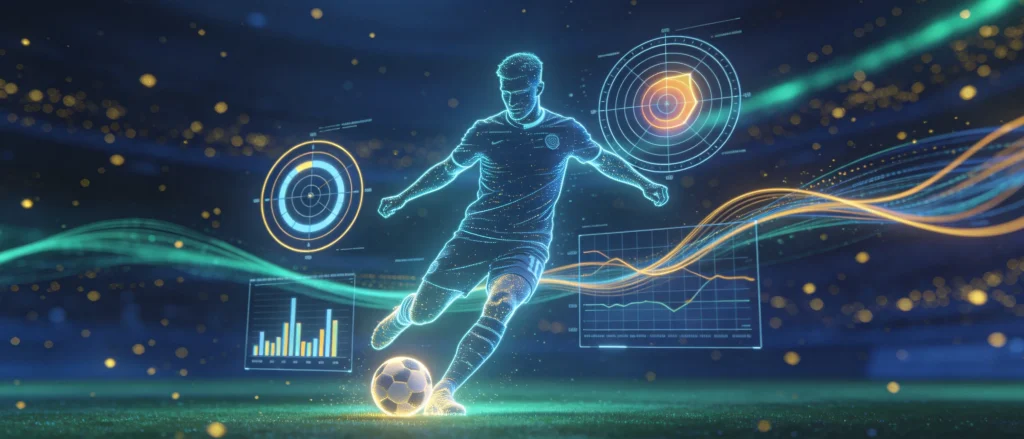
05Turning data into a live viewing experience
Data is most powerful in the moment a match is played. While following a match on our live-scores page, you can watch the score change and compare it with the pre-match win-probability, power and firepower ratings, observing whether the actual flow matches expectations. When the on-field action diverges from the indicators, that is often the most exciting and pivotal turning point of the match.
A suggested viewing flow: build expectations with the three indicators before kick-off, track progress via the live-scores page during the match, then review the difference between data and result afterward — gradually developing your own feel for reading matches. Over time, your sharpness for World Cup data analysis will naturally improve.
06In closing and a reminder
With many teams and a dense schedule, making good use of structured data indicators helps you grasp the key points of each match faster in limited time. The schedule, fixtures and format information here follows FIFA’s latest official announcements; the indicators and analysis are for reference only and are not betting advice, so please watch responsibly.
FAQ
Which data indicators should I watch at the World Cup?
Mainly win-probability, power and firepower ratings, and recent form — three indicators read together to judge team strength.
What does win-probability mean?
Win-probability uses a percentage to show the strength gap between two teams intuitively; a bigger gap means one side is more strongly favored.
What is the difference between the power and firepower ratings?
Power leans toward overall strength and defensive solidity, while firepower focuses on attacking threat; viewing them separately better reveals a team's style.
Are these figures accurate?
They are algorithmic statistical estimates combining ranking and form — useful as a viewing reference, but not a guarantee; results follow the actual matches.
Related Articles
 Data Column
World Cup Champions Through History: Every Winner from 1930 to 2022 and Classic Moments
A complete list of World Cup champions: from Uruguay's first title in 1930 to Argentina's win in 2022, with winners by edition, the all-time titles ranking (Brazil lead with 5) and classic moments, plus the latest 2026 World Cup information; schedule and squads per official announcements.
 World Cup Guide
2026 World Cup New Format Explained: 12 Groups, 104 Matches and the New Round of 32
The 2026 World Cup format gets a full upgrade — from 32 to 48 teams, a 12-group system, the total rising to 104 matches and a new round of 32. This article explains the qualification rules, the changes in matches and the three-nation hosting; schedule per…
 World Cup Guide
2026 World Cup Groups Explained: The 48-Team, 12-Group Rules, Seeding and Qualification
The 2026 World Cup expands to 48 teams in 12 groups, running from 11 June to 19 July and co-hosted by the USA, Canada and Mexico. This article explains the 12-group rules, the four-pot seeding draw, and the qualification system of two per group plus eight…